Posts Tagged ‘guest posts’
Editor’s Note: Brad Phillips is taking two weeks off to celebrate the arrival of his new son. This guest post is by Dave Nagle, a senior communications analyst for the public relations company Vox Optima.
Pick an issue…any issue. (Go ahead, I’ll wait.)
Odds are, you have an opinion about that issue. It’s also a good bet that someone else (and for that matter, a whole bunch of someone elses) has an opinion about it too. Those opinions probably fall on one side of the spectrum or the other, or in one of several places in between. That issue might be an emotionally-charged one, which means emotionally-charged opinions.
Oh, and if it’s a political issue? Hoo-boy….
The news cycle is chock full of coverage of issues with many talking heads expressing opinions about said issue. The more emotionally-charged the issue, the more emotionally-charged the opinions. Some of them are … shall we say … EXTREMELY passionate.
There’s nothing necessarily wrong with being extremely passionate, until it turns into a lot of screaming and shouting and foaming at the mouth. If they were looking to make a point or change a perception, in my opinion, they failed. Miserably.
There’s the old adage “never let emotion cloud your judgment.” For the sake of this discussion, let me modify that adage to “never let emotion trip up your message.”
Depending on the topic or issue, it’s hard to separate yourself from the emotion. I get that. We’re human beings; we have emotions. It’s only natural. But first and foremost, the goal in any interview is to effectively communicate your message, based on facts. Whether you’re the one communicating or preparing someone else to deliver the message, the desired effect is to make your point clearly and effectively in order to support or defend your position or strengthen or alter perceptions about your organization. An interview filled with rabid hyperbole and a lot of screaming and shouting does nothing to make your point. In fact, not only is your point lost, but you also run the risk of supporting the opposite point.
But to be clear, I’m not advocating completely checking your emotions at the door or switching them off like the android Data could in “Star Trek: The Next Generation.” Sometimes, during an interview, emotions have their place. But the emotion must SUPPORT your message; it cannot BE the message. Emotions don’t last long. And then what are you left with?
Oh, and don’t try to fake emotion either. People are smart. They’ll see right through you—and then tune you out. So when preparing for that interview, consider the following:
- 1. What point am I trying to make?
- 2. How do I make my point clearly and factually?
- 3. Is a degree of emotion appropriate? If so, does it SUPPORT my message?
- 4. Is my emotion genuine, or am I faking it?
Remember, never let emotion trip up your message.
Dave Nagle, a senior communications analyst for the public relations company Vox Optima, has more than 20 years of expertise in defense industry, international and national public relations consulting, crisis and strategic communication planning, media relations, media training, and writing. He can be reached at david.nagle@voxoptima.com.
Have the best of the blog delivered to your inbox twice per month! Enter your name in the box on the upper right of the blog to join our mailing list.
Tags: Dave Nagle, guest posts, media training tips, Vox Optima
Posted in Media Training Tips | 1 Comment »
Editor’s Note: This is an excerpt from “Masters of Disaster,” an excellent new book about crisis communications. The book goes into much greater detail about each of the ten “commandments” mentioned below.
I. Full Disclosure
Everything that can come out, will come out. All too often it’s the drip, drip, drip that causes most of the lasting damage. But you only get one bite at the apology apple.
II. Speak to Your Core Audience
Determine the key points to get across and stay focused on them. Reiterate your message at every opportunity. Discipline is crucial. But do not pander.
III. Don’t Feed the Fire
It’s human nature to succumb to the pressures of the moment that push you into making the situation worse. Resist that pull. But the prevent defense can keep you from winning.
IV. Details Matter
Be prepared with detailed answers to tough questions. The smallest discrepancy can get magnified into the biggest problem. But you are not in a confessional.
V. Hold Your Head High
Original actions may seem insignificant compared with mistakes made after the fact. Seize the moment to put out the entire story. But there are no second acts.
VI. Be Straight about What You Know, What You Don’t Know, and What You Are Going to Do to Fix the Problem
Your credibility is at stake—and the public can easily discern hedged answers and half-truths. When you don’t have answers, create a process to ascertain the answers, and make clear how you will fix the problem going forward. But don’t pick a fight you can’t win.
VII. Respond With Overwhelming Force
Identify the most important groups you’re trying to reach and what it is they need to hear. Keep it simple and keep saying it. But no message handcuffs.
VIII. First In, First Out
You can reduce your exposure by getting your story out there quickly and candidly. Often there are multiple players in a crisis, so let others become the star of the scandal. But know when to hold ’em, know when to fold ’em, and know when to run.
IX. No Swiftboating
Your setback is your rivals’ opportunity—and that setback often comes from those with unclean hands. Get on top of your story and your message before they do, because they’ll try to make you look worse. Expose the real agenda of your opposition. But no civilian casualties.
X. They Dissemble, You Destroy
If your opponents engage in misrepresentations about you, your organization, or your company, go after them—hard. You protect your reputation—and undermine theirs. But don’t be too quick to judge and too soon to accuse. Damage control is not horseshoes or hand grenades, close does not count. You must have the opposition dead to rights if you call them out.
Want to read more? Masters of Disaster is available in hardcover here and for the Kindle here.
Copyright © Christopher Lehane, Mark Fabiani, and Bill Guttentag, 2012.
Tags: crisis communications, guest posts, Masters of Disaster
Posted in Crisis Communications | Please Comment »
Editor’s Note: This case study was originally published in “Masters of Disaster,” an excellent new book about crisis communications. This is one of several case studies the authors highlight in the book.
In January 2009, Toyota officially surpassed GM to become the world’s number one auto company.
Toyota’s success was decades in the making and directly attributable to the commitment of the Toyoda family (the company’s founders) to building one of the world’s most trusted consumer brands.
A number of surveys over the years documented that the carmaker’s brand was among the best in the world, and this was grounded in consumer perceptions of Toyota vehicles as safe, high-quality automobiles. Consumers trusted the Toyota brand so much that the company had developed a significant competitive advantage on the basis of its customer loyalty. If you bought one Toyota, there was a good chance you would have a long-term relationship with the carmaker.
In late August 2009—the same year the company became the world’s number one auto brand—an off-duty California policeman was driving a Toyota Lexus that accelerated in excess of one hundred miles per hour and crashed, killing the officer and his family. The incident received news coverage that featured a recorded cell phone call to 911 documenting that the acceleration was uncontrolled, and the driver had no part in the sudden acceleration. In part because of the novel, TV-friendly existence of the 911 cell phone recording, this became a story in the electronic media and spiked existing concerns about whether Toyota vehicles suffered from an electronic defect that caused uncontrolled acceleration—in turn putting pressure on federal safety regulators responsible for protecting the public.
The subsequent events provide key lessons in damage control careening out of control.
At the time of the fatal accident, Toyota was well aware of quality and safety questions about unintended accelerations. The trail of evidence included data from the NHTSA (the National Highway Traffic Safety Administration—the government agency empowered to ensure automotive safety) from 2004 indicating that Toyota vehicles accounted for 20 percent of all uncontrolled acceleration accidents (compared to 4 percent in 2000); the company’s own 2009 analysis into these accidents, which suggested that the cause of the uncontrolled acceleration was due to floor mats obstructing gas pedals; and an early October 2009 recall of 3.8 million cars to address concerns that the floor mats could be obstructing the gas pedal.
However, the story ratcheted up even further when in October 2009, the Los Angeles Times launched an investigative series examining Toyota’s safety and quality practices.
Over the course of several months, the paper reported that:
- Toyota’s acceleration issues dated back to 2002, when the company began installing drive-by-wire systems in its vehicles.
- The company had received 1,200 complaints of unintended accelerations, and the uncontrolled accelerations continued even when the floor mats in question were removed.
- Toyota sought to prevent making available the data collected by onboard recorders of vehicles that had experienced uncontrolled acceleration.
- And more people had died from uncontrolled accelerations involving Toyota cars than from all the other car companies put together.
In the face of these articles and other media coverage, Toyota continued to insist that there was no defect and that the floor mats were the root cause of the uncontrolled accelerations. The company even sent a letter to its customers at the end of October 2009 explicitly stating, “no defect exists.”
A few days later, the NHTSA took the highly unusual action of issuing an especially harsh response to Toyota’s “no defect” letter, calling it “inaccurate” and “misleading,” and adding that the recall of the floor mats “does not correct the underlying defect.”
The rebuke by the feds turned what was a big story into an even bigger story.
The controversy continued to escalate and Toyota issued a press release denying media reports about the defects. However, by late November, Toyota dealers were being instructed to remove and replace gas pedals and update the onboard computers on some vehicle models.
But the accidents continued.
On the day after Christmas 2009, a Toyota Avalon carrying four passengers accelerated and crashed into a Texas lake, killing everybody on board.
By December 31, 2009, Toyota had accounted for 33 percent of all uncontrolled acceleration complaints that year.
On January 16, 2010, Toyota stated that a supplier was responsible for the gas pedals that may have had a dangerous “sticking” defect.
Then five days later Toyota announced a recall for 2.3 million cars to fix sticky pedals.
And the problems for Toyota grew still worse.
On January 26, 2010, the company suspended the sale of eight models and announced that beginning the following week it would temporarily shut down five North American assembly plants. The company did not make public that it took these steps at the direction of the federal government, but the next day, Department of Transportation secretary Ray LaHood effectively called Toyota on the carpet by publicly stating that his agency had directed Toyota to suspend its operations—a statement that Toyota had to confirm.
On February 5, Toyota president Akio Toyoda finally appeared at a press conference. Facing the media, he apologized and announced a task force involving outside experts. But by now—after multiple explanations—the damage had been done.
Toyota temporarily shut down its manufacturing plants at a cost of $54 million a day; monthly car sales dropped below 100,000 for the first time in more than a decade; Toyota’s U.S. market share fell to its lowest level since January 2006; the company’s stock dropped 16 percent; Consumer Reports removed its “buy recommendation” on eight Toyota models; the Department of Justice and the Securities and Exchange Commission initiated investigations; and Congress opened up its own inquiry, complete with public hearings.
By 2011, two years after ascending to the top, Toyota was passed by GM as the number one carmaker in the world.
And even though a subsequent NHTSA study came out generally supporting Toyota’s claim that there were no defects in the technical sense, and Toyota has since worked to claw its way back to its previous position in the public eye, Toyoda acknowledged that Toyota’s crisis response, like the warden and prisoners in Cool Hand Luke, suffered from a failure to communicate:
“We came to realize the problem was rather with communications.”
Masters of Disaster is available in hardcover here and for the Kindle here.
Copyright © Christopher Lehane, Mark Fabiani, and Bill Guttentag, 2012.
Tags: crisis communications, guest posts, Masters of Disaster, Toyota
Posted in Crisis Communications | Please Comment »
Editor’s note: Today’s post is an excerpt from PR professional Susan Young’s new Kindle eBook, The Badass Guide of Social Media and Business Communication.
I can’t tell you how many times I’ve heard the phrase, “Think like a reporter.”
Instructors, media pros, and PR wonks tell laymen this all the time. But what does it really mean? How do reporters think? And why do you need to be privy to this information?
You can’t effectively pitch stories to anyone in traditional or social media if you don’t understand how their minds operate. I was a news reporter. Please, allow me.
Here are five tips to help you figure out what they are looking for in a story:
1. Answer the question: “Who cares?” Every time someone pitched me a story, the overriding, nagging question in my mind as I listened or read was, “Who cares? Why should I cover this story?” When you write your pitch or press release, be sure you can answer that question. This is about the content the reporter or blogger provides to their core demographic; their audience. Consider this powerful statement: How does my story affect and impact their audience?
2. Understand the medium. Some stories have great visuals and are perfect for TV, video or print. For example, the demolition of a sporting arena is visually appealing but isn’t as impactful for radio news. Think about the elements available to you and how they can complement your words and storytelling.
3. Put a face on your story. News is about people. People love great stories. Yes, a quote from an author, CEO, or board member can suffice, but it’s dull. Look for a person who has been directly affected by your news. They will tell a much better and different tale. They can get to the emotion because they actually experienced something. That, my friends, is the connection to the audience. It’s all about the human factor.
4. Find something new. A good reporter will ask the question, “What’s new here? Has something happened that we haven’t covered yet?” Look for new statistics, updates, or a fresh angle. Clue: In the word “news” is the word “new.”
5. Give them the right tools. Like you, news decision makers want things to help make their jobs easier. I worked in radio. People would send me cheesy pictures in the mail of their CEO accepting some award. Forget the picture (this was pre-Internet). I needed a voice; a sound bite for my on-air newscasts. Come on, could I go into the news booth and hold up the goofy picture of the CEO and his award? Of course not. The PR person could have easily called me and arranged for the CEO to speak with me for literally two minutes so I could record the conversation and get his audio on the air. Instead, the picture and story landed in the trash. So did their credibility. You may notice that common sense is helpful.
In the end, reporters tend to be naysayers. They are so inundated with irrelevant phone calls, e-mails, texts, and general crap that it’s easy to become jaded. Mix in lousy pay, a fiercely competitive industry, and crazy hours. The mindset of, “Make my day” rules their world. It’s your job to do just that—make their day.
Susan is a great PR professional who knows her stuff. Click here for more information about The Badass Book of Social Media and Business Communication.
Tags: brad, guest posts, Susan Young, working with reporters
Posted in Media Training Tips | Please Comment »
Editor’s Note: This is a guest post by Kimber Auerbach, the Director of Communications for the New York Islanders. He wrote this to supplement a post I wrote last month about the challenge of notifying families about a death before they learn about it from the media.
I do not want my comment to come across as demeaning the bigger picture of, “Should you wait until the family is notified of a death.” That’s obviously an issue of greater severity than the one I’ll write about today, but I wanted to share an issue we deal with in sports regarding “Information being released before a player is notified.”
The trade deadline is one of the busiest days of the season in hockey (or any sport) for management as they try and better their team for either a playoff run or the future. Players are on edge because they don’t know if they’ll be on the ice skating one moment and get pulled off the next to be informed that they’ve been dealt.
Reporters are so connected to their smartphones that it has literally become a race to see who can tweet the information first. Who can write the better story about how BLANK player will fit in with the team or how this deal helps the future seems to have become secondary. The media are too fixated on tweeting the news first, as reporters want to be the one sourced in all the articles as “BLANK reporter (@BlankReporter) tweeted the news first.”
There have been players that said they found out about being traded from watching TSN TradeTracker:
It really is a shame that players wind up finding out about a trade this way. For them, it’s life altering news that means they’re going to have to pick up their world and move it to another city. Yes, the media are doing their jobs in reporting the news as quickly as they possibly can, which in one way you can’t fault them for doing. However, there should be something that prevents them from doing so until all players are notified and the information is properly filed to the league, much like there seems to be in news reporting when someone tragically passes away.
It goes the other way as well. Sometimes, the media speculate about where a player may be dealt, and family and friends of a player see the rumors before a deal is even done. We’ve had players call to ask if it’s true that they’ve been traded, only to find out the reports are false. But because the media are so into breaking the news—and are often times correct—a player’s world gets turned upside down for no reason.
Until the day when there is a system to allow a period of time between the finalization of a deal and alerting the media, we as PR reps for teams are left to confirming the news that the media has already reported.
Now available: The Media Training Bible: 101 Things You Absolutely, Positively Need to Know Before Your Next Interview. Click here to read more.
Tags: guest posts, Kimber Auerbach, sports
Posted in Reader Submissions | 5 Comments »
Editor’s Note: Today’s guest post was written by Ben Donahower, an experienced campaign operative and award-winning Toastmaster.
Politicians – and their campaigns – too often overlook their audiences. But campaigns that strategically think about to whom the candidate is speaking, and when, get the most value out of political speeches. So how should candidates plan their speeches throughout a campaign?
The best game plan for political speeches follows the campaign plan. Winning campaign plans start with voter outreach among likely supporters, transition to neutral voters, and finally return to the candidate’s base.
Political speeches should follow the same pattern because they reinforce campaign phone banks and canvasses and because it’s a formula for giving the right speech, at the right time, when the candidate has the right skills.
THE RIGHT SPEECH
A persuasive speech takes time. Candidates can use friendly audiences as a proving ground for introductions, key points, conclusions, and more subtle elements of a stump speech. A candidate’s base is a forgiving audience, so it’s a perfect group to experiment on without fear of the political consequences.
AT THE RIGHT TIME
Timing is critical on a political campaign. Campaigns should use early speeches to define the candidate and the opponent, and to detail the policies that the candidate will focus on or implement when elected. Unlike the persuasive speeches given to undecided voters over the course of most of the campaign, these early speeches are best suited for voters sympathetic to the cause. As Election Day approaches, the message on the stump changes to getting out the vote. Who is the candidate speaking to when the message is to show up at the polls on Election Day? Supporters, of course!
THE RIGHT SPEAKING SKILLS
Public speaking skills come with practice, and practice comes in two forms: preparation and delivery. This audience strategy helps reinforce public speaking skills like these: Brevity: All other things being equal, a short speech is better than a long speech. Candidates are often speaking at events where they are one of many speakers. In these cases, it’s especially important to be respectful of the time allotted and voters will thank you for it! Speech speed: Early political speeches from candidates usually have a dangerous combination of nervousness and enthusiasm, which manifests itself in very fast speeches. These tips on handling a fear of public speaking will help slow candidates down and so will practicing pauses. The most important the point, the longer the pause. Storytelling: The single most important technique to engage the audience in a stump speech is to tell a story, especially about an individual. Stories are incredibly persuasive without having to speak in terms that alienate people, they are memorable, and they imply more than the sum of the words.
THE AUDIENCE STRATEGY THAT WORKS
Finally, if there is one thing that can throw a wrench in a speech, it’s nerves. Speech-destroying nervousness is relative to the size and type of the audience. Sequentially speaking to supporters, then undecideds, and back to supporters prepares candidates for gradually more nerve racking audiences while complementing the field plan and other moving parts of the campaign.
Ben Donahower is an experienced campaign operative and award-winning Toastmaster. Connect with Ben on his website, Campaign Trail Yard Signs.
Tags: Ben Donahower, guest posts, political analysis
Posted in Reader Submissions | 1 Comment »
Editor’s Note: This article was written by Marc Slavin, an attorney and communications consultant based in California. He can be reached at marcslavin@gmail.com.
The Internet is forever.
I learned that lesson in an unforgettable way when my on-camera confrontation with a reporter went viral several years ago. No matter what I do in my life, the chances are that most people will always know me by the one public moment I would most like to forget.
The constant need of television news for spectacle, the magnifying effect of the Internet, and my own unfortunate reaction to a charged situation combined to produce enduring images of how not to handle yourself on camera.
What happened? The short answer is I let my frustration get the best of me. In the heat of the moment, I lost sight of the critical fact that my actions were no longer solely personal to me, but needed to reflect the values of numerous others whom I was representing.
Do I regret it? You bet I do.
In those few seconds I managed to lose sight of everything I have learned in 25 years of public relations. Because I reacted as I did, I made a bad situation worse. My boss at the time made the point with understated aplomb. “You could have behaved with greater reserve,” he said.
The fundamental rule I violated is this: It’s never about you. In public relations, as so many P.R. professionals reading this blog will know, you can’t take criticism personally. When you lose your objectivity, your effectiveness goes with it.
But to maintain professional equilibrium in tense circumstances you have to know something about who you are, otherwise you might surprise yourself, as I did, with behavior you hardly knew you were capable of.
Friends have said how unlike me it was to react as I did. But it was me who reacted that way, not anyone else.
My surprise and dismay at my own behavior has led me to do some serious, and helpful, soul searching. For those who may have had a similar experience, or hope to avoid one, I recommend Naomi Quenk’s book about personality types, “Was That Really Me?”
Besides the confrontation on film my experience entailed a confrontation with myself and one with the tenets of my profession. It caused me to look closely at the reasons I care about public communication and to recall that what drew me into the profession to begin with was the vitality of its contribution to social change.
As public relations practitioners, our stock in trade consists of the narratives we fashion from the events of the day. We are workers in story.
Because so much of our ability to shape the world around us depends upon narrative perspective, “framing” as we have come to call it, it helps to be aware of how we frame our own histories and purposes, the assumptions we take for granted about ourselves as we frame the narratives of our own lives simply by living those lives in the way we do from day to day.
The organizational development theorist Margaret Wheatley wrote that communication matters because information exchange is necessary to life. Bodies continually exchange information with their environment to gauge the changes they must make in order to maintain their integrity.
As I have learned, to be effective, we must be exquisitely attuned to our faults as well as our strengths. Paradoxically, changing is the only hope any of us has of being who we are.
And as for the eternity of the Internet? Take it from me: immortality is not all it’s cracked up to be.
Please leave your thoughts about Mr. Slavin’s article in the comments section below. Thank you for reading.
Tags: guest posts, Marc Slavin
Posted in Reader Submissions | 16 Comments »
Editor’s Note: This is a guest post by Bobby Zafarnia, who is the founder of Praecere Interactive, a boutique PR and social media consultancy based in Washington, DC.
When handling tough PR problems for clients, I instinctively try to recall similar experiences and run through what worked and what didn’t. For me, this routine exercise reinforces the PR version of primum non nocere, commonly known as the Latin maxim for doctors: “do no harm.”
The nice thing about this principle is its importance for any spokesperson: when responding to media inquiries, every answer must avoid attracting further inquiries. That’s our industry’s version of the Hippocratic Oath, or doing no harm for the client.
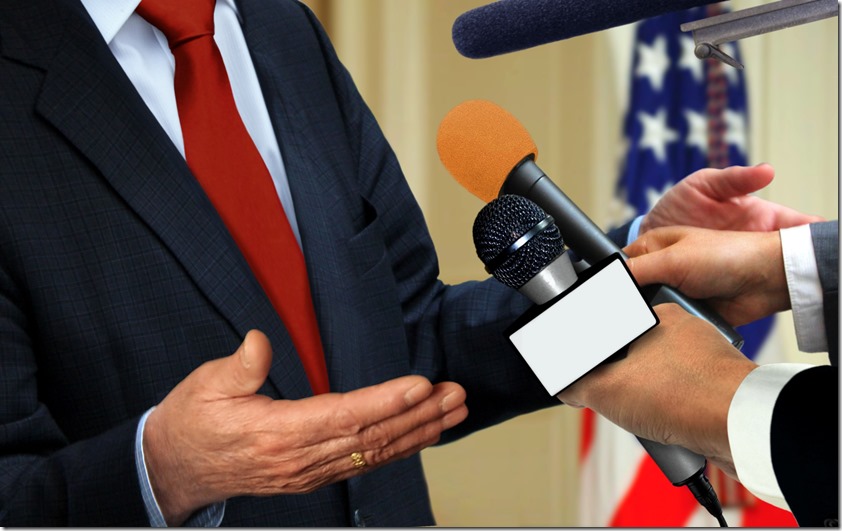
So what do I mean by this? Here’s how it works. When the klieg light heat is on, the scrum of mikes are shoved in your face, and the questions are relentless, make sure your answers are as specific as possible to the particular question. That way, if your client (or the organization you represent) is under scrutiny, you are working toward stopping the inquiries and buying time for the next move.
Put another way, each answer you provide shouldn’t invite more questions. The temptation often is strong to go beyond a question’s parameters to drive home a point forcefully; after all, it’s in every solid flack’s DNA to protect their client. But when you volunteer more information than necessary to manage a PR crisis, you may inadvertently open new lines of inquiry that will only cause more media headaches for your client.
Here’s an example. Say the question is this:
REPORTER: “Your COO has left to start her own rival business, do you have a
loyalty problem in the ranks?”WRONG ANSWER: “We don’t think her departure means that people don’t like to
work at our company.”RIGHT ANSWER: “This is a highly competitive industry, and our talent is united
and focused on going forward and leveraging all new business opportunities.”
See the difference? The wrong answer, while addressing the executive’s departure, invites more questions about employee satisfaction, which likely isn’t an ideal topic to discuss in this context. The right answer shows confidence despite the executive’s quitting, and slips in a positive outlook to reassure stakeholders. This answer not only does no harm, it helps stop an otherwise out-of-
control train of inquiry.
When you’re the messenger, particularly in crisis PR, you have to accept that the headlines will inevitably sting when they’re printed, emailed, and tweeted. Follow the do no harm principle, and you’ll likely kill the story in less than 24 hours.
Bobby Zafarnia is the founder of Praecere Interactive, a boutique PR and social media consultancy in Washington, DC. Bobby is a 13-year PR veteran, having lead media communications for Fortune 100 companies, foreign governments, Members of Congress, and national political campaigns.
Contact him at bobby@praecere.com and @praecere.
Tags: guest posts, media training tips
Posted in Media Training Tips | Please Comment »