
Should PR Pros Ever "Politicize" A Tragedy?
Last week, as Hurricane Sandy claimed dozens of lives, demolished homes, and wreaked havoc on millions of people in the eastern United States, I noticed an interesting debate playing out in my Twitter feed.
Some of my Twitter friends took the opportunity to advocate for stronger policies aimed at curbing climate change, for which they blamed Hurricane Sandy. Others took offense at that suggestion, claiming that it was inappropriate to “politicize” tragedy.
These tweets tell the story:
My new post: Let’s Politicize #Sandy fdl.me/RsvKXQ via @firedoglake. Climate change is real. RW actions make it so. Time to stop ’em.
— Spocko (@spockosbrain) October 31, 2012
#OnlyinAmerica can they politicize a disaster like #Sandy. People struggling, fix it first then worry about your agendas!
— Aqil (@shaqfu75) November 1, 2012
I’m not sure I agree with those who argue that it’s wrong to push an agenda during a tragedy. News organizations are fickle: they cover breaking news extensively but for a brief period of time, then move off the story and provide little follow-up coverage. When’s the last time you saw the Aurora movie theater shooting in the news, for example?
Therefore, PR professionals representing a cause—say climate change or gun control—face a choice: Strike immediately to capitalize on the media’s short-term focus on their issue but risk the wrath of the public, or let the moment pass to avoid criticism but lose the media spotlight.
In the case Hurricane Sandy, for example, I believe that PR pros advocating for better climate change policies should make their case while Sandy is still part of the news cycle. I believe that gun control advocates should make their case in the dark days following a mass shooting. The public will be able to create a much stronger cause and effect during a media event than weeks or months after it passes.
Of course, there’s a right and a wrong way to “politicize” tragedy. Pitches for commercial products, like this idiotic one for American Apparel, never have a place:
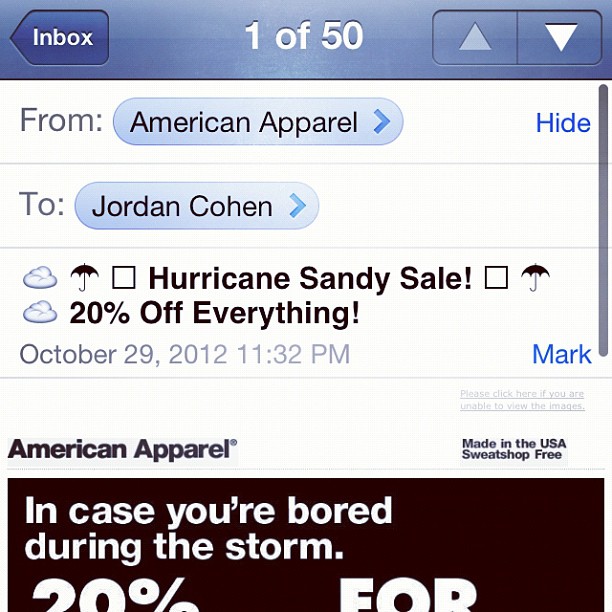
Advocating for an inherently political cause during a tragic event is a skill that requires incredible deftness, sensitivity, and tact. Tone matters. If you appear to be taking advantage of those who are suffering great losses during the tragedy, the public will rightly hold it against you.
But I wouldn’t take this approach completely off the table as a way of bringing attention to important causes.
Share this article
- Share on Facebook
- Share on Twitter
- Share on LinkedIn
- Share on Email




When I saw the results of your poll, Brad, it struck me that the results might have been very different if it were phrased differently. If you had polled people before they read your very persuasive article, I believe almost everyone would have voted that it was wrong to ‘capitalize’ on someone’s grief or to ‘politicize’ a tragedy.
Politicize, capitalize, and push an agenda all have negative connotations. Rephrasing the question in neutral terms would probably have produced very different results. Cause marketing, for example, could be viewed as capitalizing on people’s emotions.
Human nature being what it is, when someone raises an issue during a crisis, there will always be those in the opposing camp who will condemn it as ‘politicizing’ or ‘capitalizing’ on the situation. I think the real issue to be considered is whether or not the end justifies the means. Is it ethical to use a passive aggressive ad hominem tactic to stop logical debate of the issues? Silencing the opposition by claiming the moral high ground has been used by demagogues throughout history.