
Eight Great Ways To Open A Speech (Part Two)
Editor’s Note: This is the second part of a three-part series featuring eight great ways to open a speech. You can read part one here and part three here.
Yesterday, you learned that the opening minutes of a presentation are often the most important. In fact, the authors of The Definitive Book of Body Language maintain that the audience forms 60 – 80 percent of its impression of a speaker within the first four minutes. (That’s good news, since it means you have at least a 20 percent chance of redeeming yourself if you blow the opening!)
Today’s post will cover three ways to open a presentation or speech: asking a rhetorical question, asking a “show of hands” question, or speaking with your audience.
 Opening Number Three: Ask a Rhetorical Question
In his book Words That Work, political strategist Frank Luntz writes that it’s critical to help audiences visualize your topic by painting a vivid picture for them. He writes:
“One word automatically triggers the process of visualization by its mere mention: imagine.”
Ask the audience to imagine something by using a rhetorical question. You don’t have to use the specific word imagine, but your question should trigger the same visualization process. For example, you might begin this way to a group of stressed out working parents:
“I’d like to begin by asking you to think about your typical weekday morning routine (pause for five seconds). I know it may be difficult, but I’d like you to try to picture what it would be like not to rush around on five-and-a-half hours of sleep every morning and enjoy a leisurely weekday morning routine instead (pause for five seconds). Today, I’m going to offer you three strategies for making the impossible possible.”
Opening Number Four: Ask a “Show of Hands” Question
I often begin my media training and public speaking workshops with a “show of hands” question. Those questions can increase audience buy-in from the very beginning, since members of the audience are able to see how their answers compare to those of their peers. Plus, you can use this device to lead people to powerful self-realizations and conclusions.
For example, I occasionally begin my presentation training workshops by asking:
“How many of you absolutely love public speaking?” (only a few people raise their hands, provoking laughter)
“How many of you actively volunteer for every chance you get to deliver a presentation?” (again, almost nobody raises their hands)
“How many of you believe it would be good for your careers if you could go into a room and deliver a knock out presentation to top leadership, key clients, or major donors?” (almost every hand goes up, demonstrating the disconnect between what they feel and what they do)
Opening Number Five: Speak With Your Audience
I often begin by asking questions to the audience at the very beginning of a presentation. Doing so helps create a climate of audience participation from the start. Plus, their answers are often useful for helping me better understand the audience.
When leading a media training workshop, for example, I might begin by going around the room (or selecting a single row or table, for larger groups), and asking them to share their biggest media interviewing fear with me.
“Rhonda, what’s your biggest concern with being interviewed by a reporter?”
Almost always, Rhonda’s answer will be something I plan to cover during the session. If that’s the case, I’ll refer back to her when I get there:
“Rhonda, at the beginning of the session, you mentioned that you were afraid of being misquoted. Let’s talk about that now.”
And if I wasn’t planning on covering Rhonda’s topic, her question provided me with great information; if I add just two minutes anywhere in my presentation about her primary concern, I’ve addressed an important issue that I otherwise wouldn’t have thought to cover.
Read part three of this series here.
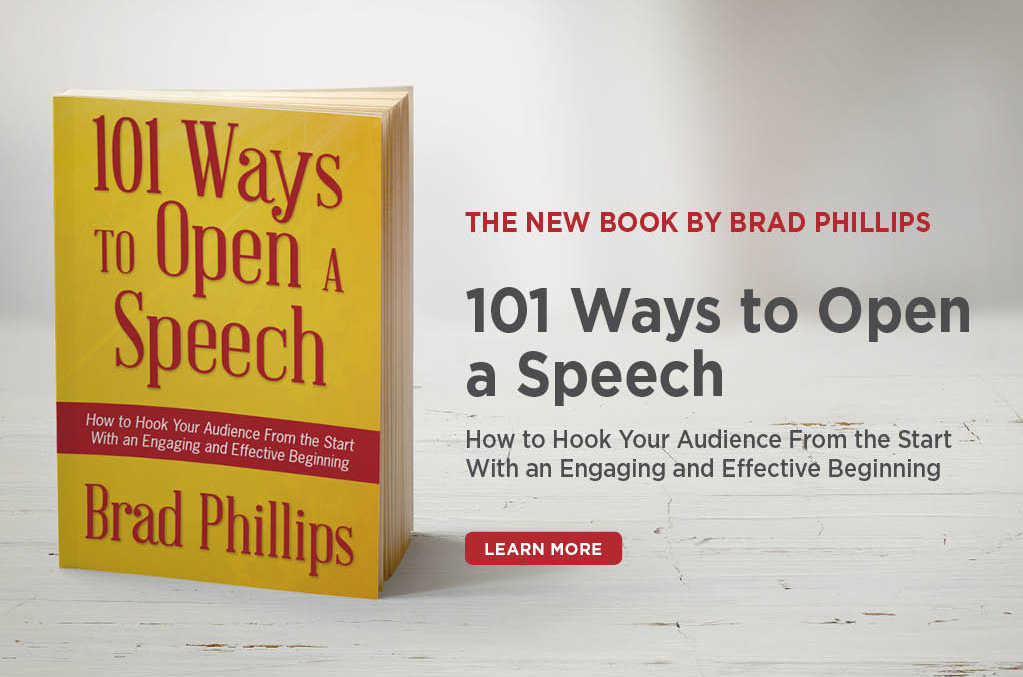
My new book, 101 Ways to Open a Speech, is now available at Amazon. You can read more about the book here.
Share this article
- Share on Facebook
- Share on Twitter
- Share on LinkedIn
- Share on Email